LATEST POSTS

(from SCHOTT MUSIC website, Jazz Appreciation Month, April 2026)
From Nina Simone to Hiromi: Women Who Transformed Jazz Piano
Thanks to Joy Ellis and Nathalie Lacloche for their help with this article.
For much of jazz history the spotlight has often fallen on male musicians. Yet from the earliest days of the music, women jazz pianists have played a vital role in shaping the sound and development of jazz.
As a piano teacher I frequently ask new students who are their favourite jazz pianists, or even just to name a jazz musician they enjoy listening to. It's noticeable that many of the revered jazz players of the past (and present) are very often men.
It can seem that either there weren’t very many women jazz musicians, or that they have been side-lined or ignored. This is a situation that was very familiar in the 19th century art world, when the profession of artist was not considered suitable for a woman, with female painters being denied admission to academies and prevented from exhibiting their work.
In the early 20th century USA there were however many other good reasons for the lack of female jazz performers. The life of a professional jazz musician was fraught with difficulty, involving constant travel, extremely late working hours, hardly any security and erratic pay. If you were black there were also the challenges of segregation and racism, which meant you could play in a venue but not necessarily eat, drink or sleep there, or even enter by the front door.
Added to this was the frequent presence of drugs, alcohol and the consequent harassment by police. In order to function as a woman in this largely male world you had to be pretty tough. Fortunately, in more recent years the balance has been redressed considerably, with a large number of excellent female pianists making their presence felt.
As part of the JAZZ PIANO LIBRARY series of podcasts for Morley Radio I’ve recorded three programmes about Women Jazz Pianists, with fellow pianist Joy Ellis as my guest and co-presenter. Over the course of these we've played recordings by pianists dating from the 1920s to the 2020s – the whole history of recorded jazz.

The 21 Best JAZZ PIANO TRIO Albums
Having recorded three TRIO albums myself, the format of piano, bass and drums is close to my heart. Here are some of the recordings I keep coming back to, presented in chronological order of recording, with links to a sample track for each album on YouTube.
In my opinion, these albums should be in the collection of anyone interested in jazz piano. For further tracks and in-depth info about all these pianists, please check out my Jazz Piano Library podcasts on Morley Radio.
• This blog is now available as an Extended Podcast on Morley Radio.
1. Bud Powell – THE AMAZING BUD POWELL Vol 1 (1951)
A Night in TunisiaOne of a pair of Blue Note albums that show the quintessential bebop pianist at his virtuosic best. The CD re-issue include some alternate takes and it’s amazing to hear how different his improvising is on successive versions of the same tune, especially his flawless 16th-note double-time runs on the famous 4-bar break in Night in Tunisia. Also check out the cadenza/ending on the same tune (which is completely different on the
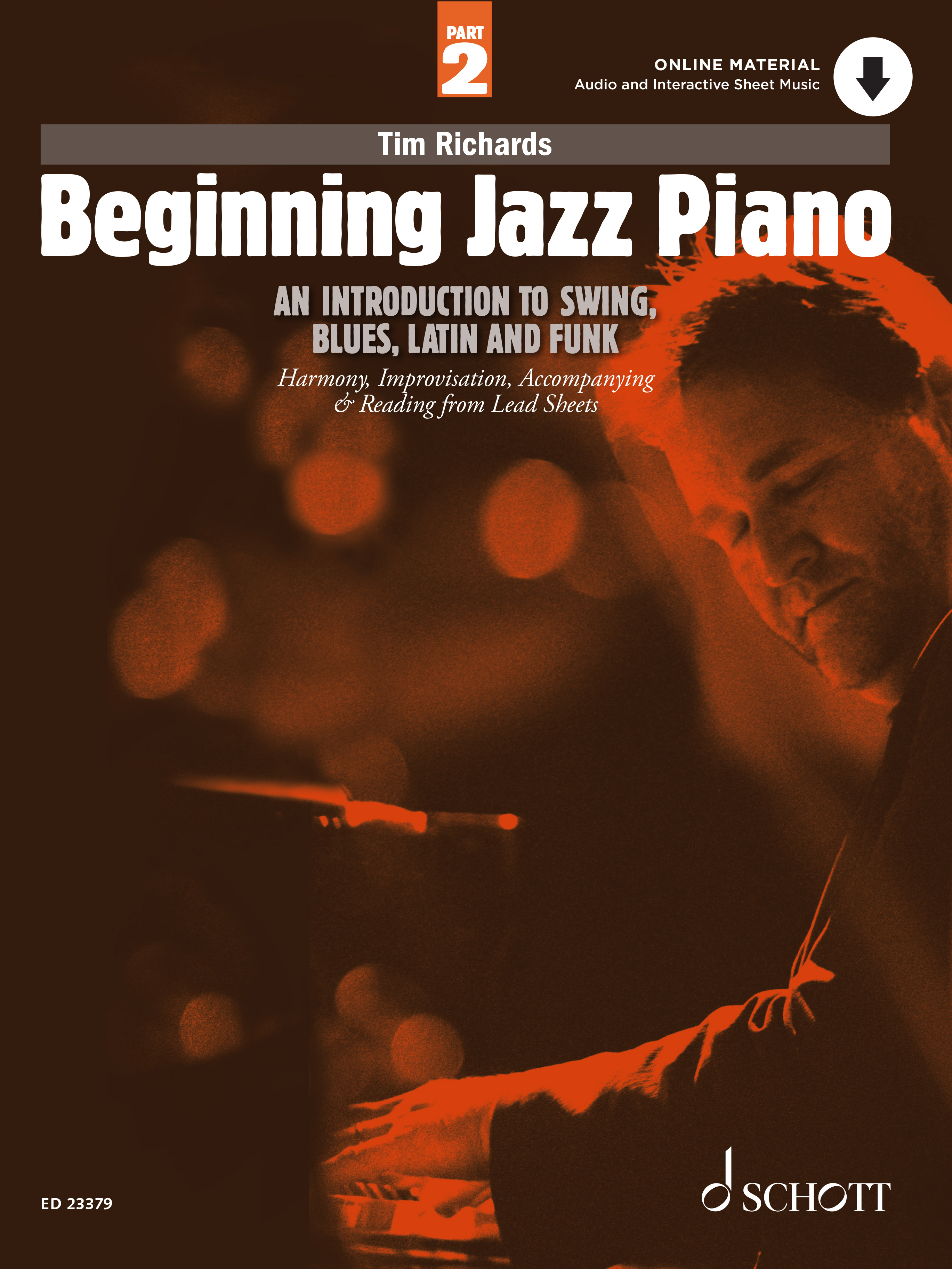
BEGINNING JAZZ PIANO Pt 2
Part 2: Harmony, Improvisation, Accompanying & Reading for Lead Sheets - Schott Music - ED 23379
The ‘Beginning Jazz Piano’ books are aimed at players with some piano experience who wish to develop a grasp of the basic tools required to play and improvise in a jazz style. Part 2 continues the approach to Harmony and Improvisation begun in Part 1, with some important differences.
Many of the tunes in this volume, unlike the simple one-, two- or three-chord pieces in Part 1, are based on well-known tunes such as Lester Leaps In, Perdido and Lover Man, introducing the reader to longer song-forms such as the 32-bar AABA sequence typical of many jazz standards.
Read more...
BEGINNING JAZZ PIANO Pt 1
Part 1: Everything You Need to Get Started - Schott Music - ED 23374
Since my two-volume method Exploring Jazz Piano was published by Schott Music in 2005 I’ve been asked countless times whether it would be possible to produce something with a gentler learning curve, catering for the complete newcomer to jazz.
At last, this is that book! If you have a basic piano technique this will help you make the transition from reading sheet music to improvising creatively, and above all using your ears. It’s also a book you can use with a friend or teacher, who can accompany you by playing the written bass lines provided, thereby making sure you keep good time and stay ‘in the groove’.
Read more...
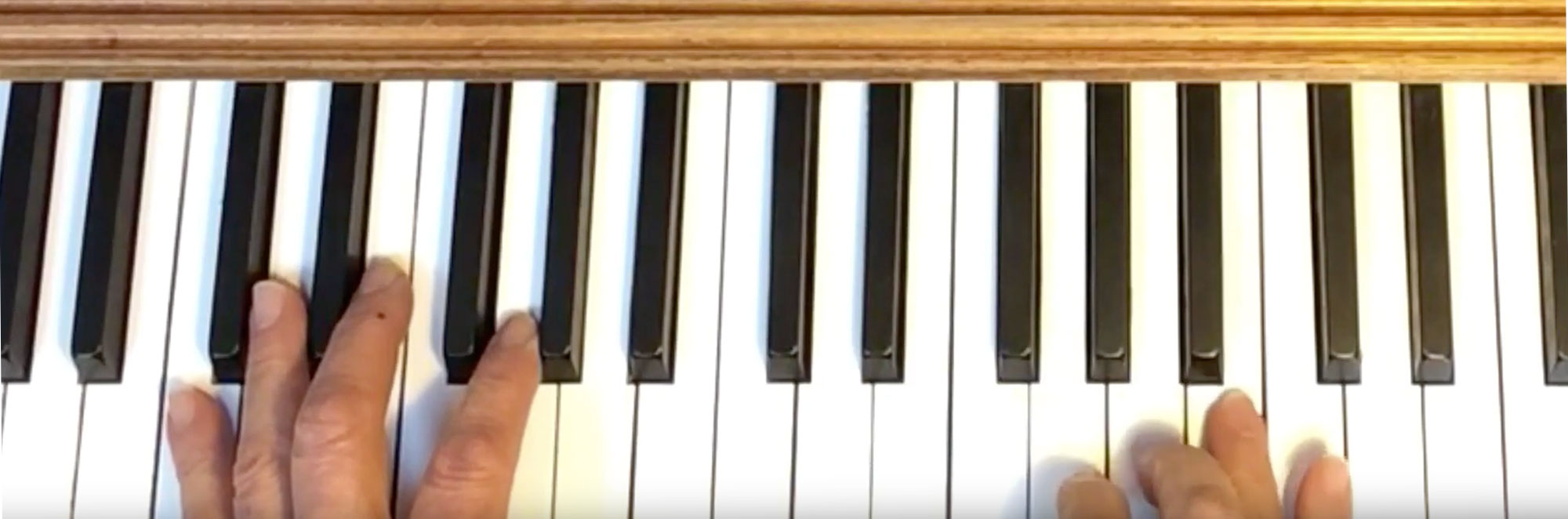
Tim's Top 10 Tips for Playing Jazz Piano
1. Listen to as much jazz as possible
The sheer diversity of styles that fall under the banner of 'jazz' can be overwhelming. Get familiar with some of the big names, past and present. If you don't know many names, make it your business to check out some of the greats, eg:
Bill Evans, Keith Jarrett, Thelonious Monk, Herbie Hancock, McCoy Tyner, Chick Corea...
Read more...
Introducing Improvisation
This blog first appeared on the ABRSM website, May 2018
I have a clear recollection of my first encounter with a piano, aged 7. My feet could only just touch the pedals, but I could stretch my left hand all the way down to the lowest notes, and my right to the very highest ones at the top. I was immediately captivated by the seemingly infinite possibilities, the combination of high and low, the rich resonance produced by the sustain pedal…
Read more...
Improvisation Notes
This article appeared in
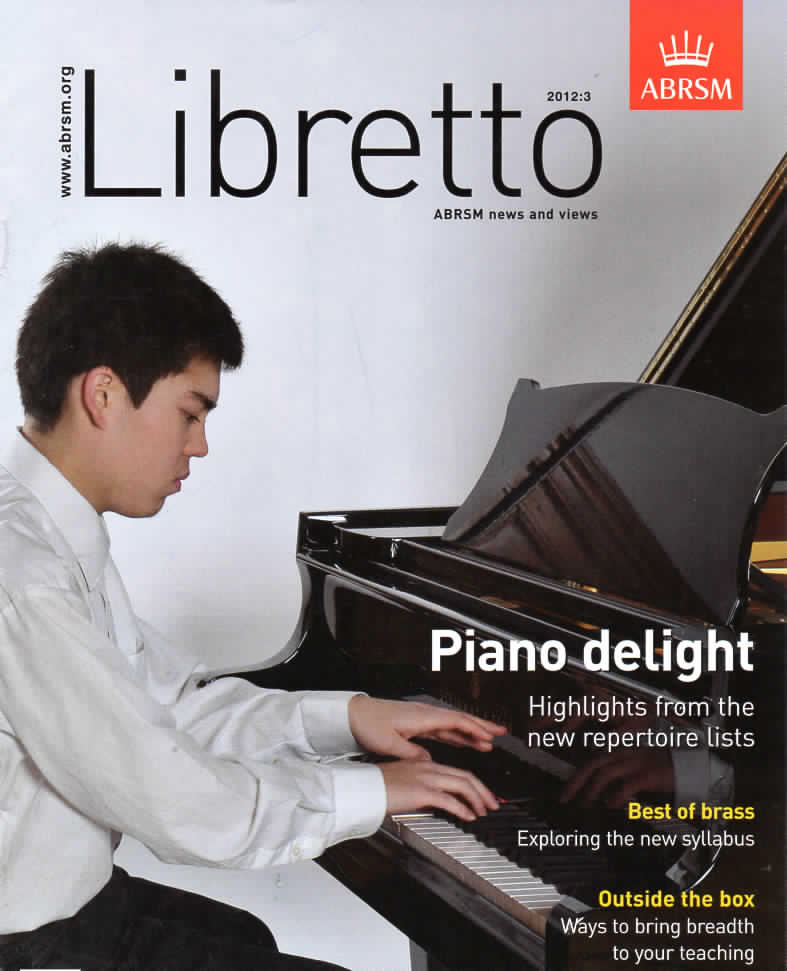
Libretto magazine (ABRSM), Feb 2012
Tim Richards throws some light on interpreting the suggested-notes boxes given in the improvisation sections of jazz syllabus pieces.
All ABRSM jazz exams feature improvisation as an integral part of every piece, which can be an unfamiliar task for those not used to providing creative input of this nature. To help with this process, the improvisation sections feature a selection of notes in a box, implying that the player can choose from these notes for as many bars as necessary, until another box comes along, or the written material reappears.
One of the first things to bear in mind is that the suggested notes or scale are not compulsory, and the examiner will not be marking the candidate on whether s/he uses them or not. As long as the...
Read more...